Dog tooth decay is more common than most pet owners realize, and the early signs often go unnoticed. By the time symptoms become obvious, your dog may already be in pain or dealing with serious dental issues.
In this guide, we’ll break down the subtle warning signs of tooth decay in dogs, what causes it, and how you can protect your pet’s oral health before it turns into a bigger problem. This guide can help you stay proactive about your dog’s dental care.
Why Dog Tooth Decay Is a Serious Concern
Many pet owners assume bad breath is normal in dogs—but it’s often the first sign of dog dental issues. Tooth decay and gum disease can lead to:
- Chronic pain
- Difficulty eating
- Tooth loss
- Infections spreading to vital organs
Studies suggest that nearly 80% of dogs over age 3 show signs of dental disease. That’s why recognizing early symptoms of dog tooth decay is critical.
1. Persistent Bad Breath (More Than Just “Dog Breath”)
Bad breath, or halitosis, is one of the earliest and most overlooked signs of dog cavities and tooth decay.
What to watch for:
- Strong, foul odor that doesn’t go away
- Metallic or rotten smell
- Breath worsening over time
Why does it happens:
Bacteria build up in your dog’s mouth due to plaque and tartar. Over time, this leads to dog dental disease signs like decay and infection.
If your dog’s breath suddenly smells worse than usual, it’s time for a dental check, not just a treat to mask the odor.
2. Yellow or Brown Buildup on Teeth
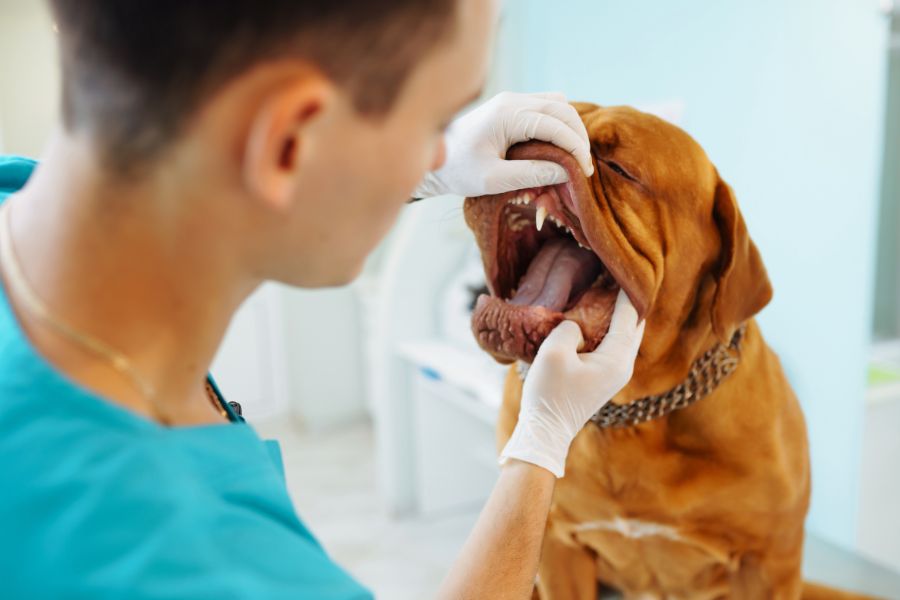
Take a quick look at your dog’s teeth. Do you notice discoloration near the gum line?
Common signs:
- Yellow or brown tartar buildup
- Rough texture on teeth
- Red or swollen gums
What it means:
This buildup is plaque that has hardened into tartar, a major contributor to dog tooth decay. If untreated, it can lead to gum disease and tooth loss.
3. Changes in Eating Habits
Dogs are good at hiding pain. One of the most subtle signs of dog oral health problems is a change in how your dog eats.
Look for:
- Dropping food while eating
- Chewing on one side of the mouth
- Avoiding hard food or treats
- Eating slower than usual
Why it matters:
Tooth decay can make chewing painful, especially if dog cavities or exposed nerves are involved.
If your dog suddenly becomes picky or hesitant at mealtime, it may not be behavioral; it could be dental.
4. Excessive Drooling or Pawing at the Mouth
Unusual drooling is another red flag for dog dental issues.
Warning signs:
- Thick or stringy saliva
- Blood-tinged drool
- Frequent pawing at the mouth
- Rubbing face against furniture
Possible causes:
- Tooth infection
- Gum inflammation
- Advanced dog tooth decay
These symptoms often indicate discomfort or pain that your dog cannot express in other ways.
5. Loose or Missing Teeth
This is a more advanced but still sometimes overlooked sign of dog dental disease.
What to check:
- Teeth that move when touched
- Gaps where teeth used to be
- Bleeding gums
Why it’s serious:
Loose teeth mean the supporting structures (gums and bone) are already damaged. At this stage, dog oral health problems can quickly worsen without treatment.
What Causes Dog Tooth Decay?
Understanding the root causes helps you prevent future issues.
Common causes include:
- Poor dental hygiene
- Lack of regular brushing
- Soft food diets without dental cleaning
- Genetics (some breeds are more prone)
- Age-related wear and tear
Small breeds like Chihuahuas and Yorkies are especially vulnerable to dog cavities due to crowded teeth.
How to Prevent Dog Dental Issues
Prevention is always easier and less expensive than treatment.
Daily habits that help:
- Brush your dog’s teeth 2–3 times per week
- Use vet-approved dental chews
- Provide safe chew toys
- Avoid sugary human foods
Professional care:
- Annual dental exams
- Routine cleanings under veterinary supervision
- Early treatment of dog dental disease signs
For pet parents in Glen Allen, scheduling routine dental checkups at Short Pump Animal Hospital can make a significant difference in your dog’s long-term health.
When Should You See a Vet?
Don’t wait until symptoms become severe. Seek veterinary care if you notice:
- Persistent bad breath
- Visible tartar buildup
- Changes in eating habits
- Drooling or mouth pain
- Loose or missing teeth
Early dental care can prevent complications and reduce treatment costs.
Why Early Treatment Matters
Ignoring dog tooth decay can lead to more than just dental pain.
Potential complications:
- Jaw infections
- Tooth root abscesses
- Heart, liver, or kidney issues due to bacteria spread
Prompt care not only improves your dog’s comfort but also protects their overall health.
Conclusion
Dog tooth decay is often silent in its early stages, but the impact can be serious if left untreated. From bad breath to subtle changes in eating habits, these warning signs shouldn’t be ignored.
By staying alert to these symptoms and prioritizing your dog’s oral health, you can prevent painful dental issues and costly treatments down the road. If you notice any of these signs, don’t wait; schedule a dental checkup at Short Pump Animal Hospital today.
FAQs
Q1: What are the first signs of dog tooth decay?
Ans: Early signs include bad breath, yellow tartar buildup, and mild gum redness. These symptoms often appear before more serious dental problems develop.
Q2: Can dog cavities heal on their own?
Ans: No, dog cavities do not heal naturally. They require veterinary treatment to prevent worsening pain, infection, and tooth loss.
Q3: How often should I brush my dog’s teeth?
Ans: Ideally, brush your dog’s teeth 2–3 times per week to maintain good dog oral health and reduce plaque buildup.
Q4: Is bad breath always a sign of dental disease in dogs?
Ans: Most of the time, yes. Persistent bad breath is one of the most common signs of dog dental disease and should be evaluated by a vet.
Q5: When should I take my dog for a dental checkup?
Ans: Dogs should have a dental exam at least once a year, or sooner if you notice symptoms of dog dental issues like drooling, pain, or eating changes.