
Every year, millions of pets go missing and never make it home. In Glen Allen, VA, we see this firsthand, and the heartbreak is real. A microchip can change that outcome entirely. Pet microchipping benefits go far beyond a simple ID tag. They give your pet a permanent, tamper-proof form of identification that works even when collars slip off or tags fade. This guide walks you through everything you need to know about microchipping: what it is, how it works, what to expect during the procedure, and why it is one of the most important steps you can take for your pet’s safety. Whether you have a new puppy, a curious cat, or a senior dog, microchipping is a straightforward, affordable decision that could one day bring your pet back home to you.
What Is Pet Microchipping and Why Does It Matter?
A microchip is a tiny electronic device, roughly the size of a grain of rice. It is implanted just beneath your pet’s skin, typically between the shoulder blades. Each chip carries a unique identification number that links to your contact information in a national pet registry.
When a lost pet is brought to a shelter or veterinary clinic, staff scan for a chip using a handheld reader. That number pulls up your information immediately. There is no battery, no moving parts, and no signal to lose. It simply works.
An estimated one in three pets will go missing at some point during their lifetime. Microchipped pets are significantly more likely to be reunited with their owners compared to pets with tags alone. That statistic alone tells you why so many veterinarians recommend this as a standard part of new pet care.
Signs Your Pet Needs a Microchip
Does your pet need to be microchipped? The honest answer is yes, almost certainly. Here are the clearest indicators:
- Your pet goes outdoors. Dogs on walks and cats allowed outside face daily exposure to traffic, strangers, and unpredictable situations.
- Your pet is an escape artist. Some dogs and cats are determined to find a way out. A collar is not always enough.
- You recently adopted or rescued your pet. Shelters sometimes microchip before adoption, but not always. Confirm with your vet.
- Your pet travels with you. Road trips and new environments increase the chance of a pet slipping away.
- Your pet has no permanent ID. A collar can fall off, break, or be removed. A chip cannot.
In our experience, many pet owners in the Glen Allen area don’t think about microchipping until after a close call. We always say: don’t wait for the scare. The best time to microchip is before your pet ever goes missing.
What to Expect During Microchipping Process
The microchipping procedure is quick, simple, and well-tolerated by most pets. Here is exactly what happens when you bring your pet in:
- Check-in and brief exam. Your vet confirms your pet is healthy and ready for the procedure.
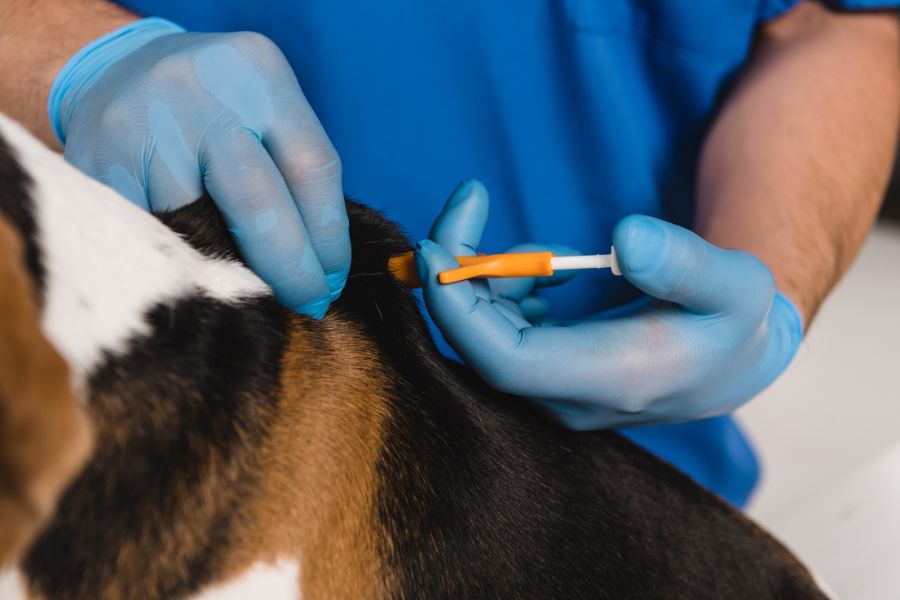
- Chip insertion. A sterile needle delivers the chip beneath the skin between the shoulder blades. No anesthesia is required.
- Scan to confirm. Your vet immediately scans to verify the chip is reading correctly.
- Registry enrollment. You provide your contact information, which is linked to your pet’s unique chip number in a national database.
- You’re done. The entire process takes just a few minutes. Most pets barely flinch.
Pet owners often tell us they were expecting something much more involved. The reality is that this vet microchip procedure is no more uncomfortable than a routine vaccination. Pets recover instantly and can go home right away.
Pet ID Without a Collar: Why a Chip Is Different
Many pet owners assume a collar with tags is enough. It is a reasonable thought, but collars have real limitations. Tags corrode over time. Collars can break, stretch, or be deliberately removed. If your pet ends up in a shelter without a collar, there is no way to trace them back to you.
A microchip provides pet ID without a collar dependence. The number is registered to you and cannot be altered. It does not rust or fade. It travels with your pet for life. The American Veterinary Medical Association (AVMA) recommends microchipping as a complement to, not a replacement for, ID tags, giving your pet two layers of protection.
We frequently remind our clients that microchipping and collar tags work best together. One visible, one permanent. That combination gives your pet the strongest chance of coming home safely.
One common misconception we hear is that microchips work like GPS trackers. They do not. A chip is passive. It requires a scanner to read it. But that scanner is standard equipment in virtually every veterinary clinic and animal shelter in the country. So when it counts, the system works.
How Microchipping Supports Lost Pet Recovery
Lost pet recovery comes down to one thing: can someone identify your pet and reach you? A microchip makes both of those things possible, even years after implantation.
When a lost pet is scanned and the chip number is matched to a registered owner, reunification can happen within hours. Shelters across Virginia actively scan every incoming animal. That means microchip your pet today, and every shelter in the region becomes part of your safety net.
The key step that many pet owners miss is registration. Implanting the chip is only half the process. You must register your contact information with a national database and keep it current if you move or change phone numbers. Your vet can walk you through this at the time of the procedure.
Lost pet recovery rates are dramatically higher for microchipped pets. According to shelter data reviewed by animal welfare organizations, microchipped dogs are reunited with their owners at a rate nearly two and a half times higher than unchipped dogs. For cats, the difference is even more dramatic.
Conclusion
Microchipping is one of the simplest, most effective things you can do for your pet. The procedure takes minutes, lasts a lifetime, and could make the difference between a pet that comes home and one that never does. Pet microchipping benefits are clear: permanent identification, better recovery odds, and peace of mind that no tag or collar can fully provide. If your pet is not yet microchipped, now is the right time to act. The team at Short Pump Animal Hospital is here to make the process easy, comfortable, and stress-free for both you and your pet. Book an appointment today.
Frequently Asked Questions
Does microchipping hurt my pet?
Ans: Most pets experience only minor discomfort during microchipping, similar to a standard vaccine injection. No anesthesia is needed, and pets recover immediately. Many animals do not react at all.
How long does a microchip last?
Ans: Microchips are designed to last the lifetime of your pet. They contain no battery or moving parts, so they do not degrade or require replacement under normal circumstances.
What if I move or change my phone number?
Ans: You must update your contact information in the microchip registry whenever your details change. The chip number stays the same; only your registered information needs updating. Contact your vet or the registry directly to make changes.
Can a microchip track my pet’s location in real time?
Ans: No. Microchips are not GPS devices. They are passive chips that can only be read by a handheld scanner. They do not emit signals or allow real-time tracking.
At what age can my pet be microchipped?
Ans: Most veterinarians recommend microchipping as early as 8 weeks of age. It is safe for puppies and kittens and is often done at the same visit as early vaccinations. Ask your vet what timing works best for your pet.