
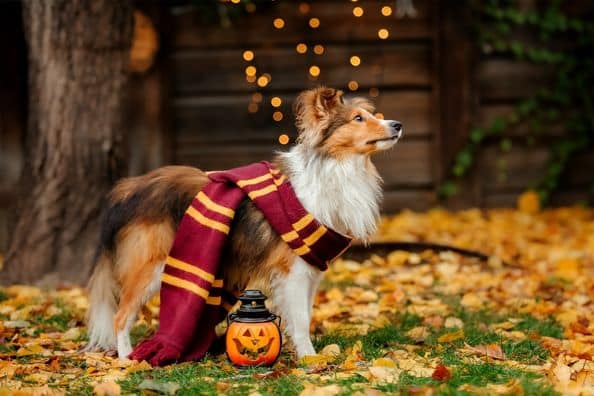
Halloween is one of the most reliably stressful nights of the year for anxious dogs, and knowing how to calm anxious dog Halloween night situations effectively is a skill every dog owner benefits from developing before October 31st arrives. The combination of doorbells, costumes, loud groups of children, unusual smells, and disrupted household routines creates a stress load that many dogs genuinely cannot self-regulate through. What looks like “bad behavior,” such as barking, trembling, destructive activity, or attempted escape, is almost always a stress response, not disobedience. The good news is that with the right preparation and management approach, most dogs can get through Halloween night with significantly reduced distress. This guide covers the behavioral science behind Halloween anxiety in dogs, what signs to watch for, and a practical toolkit of calming strategies you can implement before, during, and after the night.
Why Halloween Is a Perfect Storm for Dog Anxiety
A dog’s stress response is triggered by novelty, unpredictability, and perceived threat. Halloween delivers all three in concentrated form over a two-to-three-hour window.
Anxious dog behavior signs begin before the doorbell even rings for the first time. The olfactory environment changes when decorations go up. Artificial scents from candles, synthetic materials, and carved pumpkins all register as novel chemical signatures in a dog’s highly sensitive nose. Behavioral changes in household members as they prepare costumes and anticipate guests add another layer of deviation from normal routine.
When trick-or-treating begins, the stress compounds rapidly. The doorbell produces a predictable canine arousal response: it is a learned signal for stranger arrival. On a normal day, one or two doorbell events happen with long gaps between them. Halloween compresses fifty or more into a ninety-minute window with no recovery time between triggers. Each ring activates the stress response before the previous one has fully resolved. By hour one, many dogs are operating on significantly elevated cortisol that makes every subsequent trigger feel more intense.
Dog anxiety management requires understanding that the goal is not to make your dog tolerate a difficult environment with willpower. It is to reduce the stress load to a level they can actually manage or to remove them from it entirely.
Recognizing Anxious Dog Behavior Signs on Halloween
Many owners misread their dog’s stress signals, particularly in the early stages when the behavior is still subtle. Knowing the full range of what anxiety looks like in dogs helps catch it before it escalates.
Early-stage anxiety signs:
- Yawning repeatedly when not tired
- Excessive licking of lips or nose
- Ears held flat or pulled back
- Tail tucked or carried low
- Whale eye showing the white of the eyes while looking sideways
- Refusing food or ignoring treats they normally find irresistible
Mid-stage anxiety signs:
- Panting when not warm or recently exercised
- Inability to settle pacing, circling, repeatedly changing positions
- Increased vocalizing: whining, low growling, or persistent barking
- Seeking contact with the owner more than usual, or conversely, avoiding all contact
- Trembling
Severe anxiety signs:
- Destructive behavior focused on escape routes: doors, windows, baseboards
- Drooling or vomiting from stress
- Loss of bladder or bowel control
- Attempting to bite when approached
Halloween dog stress relief measures need to be in place before the severe stage, because once a dog is in full crisis, environmental management becomes much harder. The window for the most effective intervention is during the early-stage signs.
Calming Techniques for Nervous Dogs Before Halloween Night
The most effective calming techniques for nervous dogs are ones that begin before the stressful event, not during it. These approaches work by either reducing baseline anxiety before October 31st or building positive associations with potential stressors.
Exercise before the evening begins. A thorough physical exercise session two to three hours before trick-or-treating starts lowers baseline arousal and depletes some of the physical energy that would otherwise feed into anxiety. A tired dog is not a calm dog, but a well-exercised dog has less surplus energy available to direct into stress responses.
Gradual exposure to costume and decoration novelty. In the days before Halloween, let your dog investigate the costumes that household members will wear, the candy buckets, and any decorations being placed in the home. Dogs that encounter these objects with time and positive reinforcement before the night experience them as familiar rather than novel on Halloween itself.
Pheromone support. Dog-appeasing pheromone diffusers are most effective with two to three weeks of prior exposure, but even a few days of use reduces baseline anxiety enough to make the night more manageable. Pheromone collars and sprays are faster to deploy and can be used as a supplement on the night itself.
Practice relaxation cues. If your dog knows a “place” or “settle” cue, the week before Halloween is a good time to reinforce it heavily with high-value rewards. A dog with a strong trained relaxation behavior has a tool you can actively use during the evening to redirect stress.
How to Calm Anxious Dog Halloween Night: The Full Evening Plan
Dog anxiety management is most effective when the evening is structured rather than reactive.
Two hours before trick-or-treating begins: Complete the exercise session. Feed a normal meal at the regular time. Begin winding down household activity toward the dog’s usual evening routine as much as possible.
One hour before: Prepare the safe room. This is a room your dog is comfortable in, not a crate, unless your dog is fully crate-trained and finds the crate genuinely calming. Place their bed, a water bowl, and a long-lasting high-value treat inside. A stuffed, frozen Kong is ideal: the licking and chewing behavior it requires has a physiologically calming effect independent of the flavor reward. Start the background noise with white noise, a fan, or a low-volume television before your dog enters the room.
When trick-or-treating begins: Move your dog to the safe room calmly, without drama. If you treat the transition as a normal, positive routine event, your dog is more likely to accept it as one. Close the door fully. Do not check on the dog repeatedly, as this reinforces that there is something to be concerned about.
During trick-or-treating: Have a second adult manage the door if possible, freeing one person to monitor the dog’s room without opening it. If your dog vocalizes initially and then quiets, that is a normal resolution of the stress response in a contained environment. If vocalizing continues intensely for more than 20 minutes, check on the dog calmly without bringing them into the active area.
After the last trick-or-treater: Give your dog at least 15 minutes after the activity ends before reintroducing them to the household. The residual smell of dozens of strangers near the front door will still register as a recent territory intrusion, and an immediate return can restart the alert response.
Halloween Dog Stress Relief When Anxiety Is Severe
For dogs with significant anxiety disorders, the above management strategies are necessary but may not be sufficient. Halloween dog stress relief in these cases requires veterinary involvement before the holiday.
Calming techniques for nervous dogs at the severe end of the anxiety spectrum may include behavioral support options available through your nearest veterinarian, such as prescription solutions for high-stress situational events. These work most effectively when introduced prior to the event rather than administered at the peak of the crisis.
In Glen Allen, VA, Halloween evening generates significant neighborhood activity with high foot traffic and extended trick-or-treating windows in residential areas. For dogs in these neighborhoods, the exposure duration is longer than average, making pre-event veterinary consultation especially worthwhile for dogs with a history of severe anxiety.
At Short Pump Animal Hospital, quality veterinary care includes behavioral health support, and we routinely help pet owners develop Halloween management plans before the night arrives. If your dog has struggled on previous Halloweens, this is the year to get ahead of it. Book an appointment today.
Frequently Asked Questions
Q: Should I stay home with my anxious dog on Halloween?
Ans: If your dog has significant anxiety and no other adult can manage them, staying home is the more responsible choice. A dog left alone during a high-stress event without support can cause injury to themselves through destructive behavior or develop worsened anxiety from the unmanaged experience. If staying home is not possible, having a trusted dog sitter stay with your dog is a good alternative.
Q: Does giving my dog extra attention during Halloween help their anxiety?
Ans: This depends on the dog and the type of attention. Calm, grounding contact can help some dogs. However, anxious hovering, repeated attempts to comfort a dog that keeps pulling away, and responding to every bark with attention can inadvertently reinforce the anxiety response. The most effective support is a prepared environment, not intensified interaction during the stressful period itself.
Q: Are calming treats or supplements helpful for Halloween anxiety?
Ans: Some dogs respond to commercially available calming supplements, particularly those containing L-theanine or certain herbal compounds. Results vary considerably between individual dogs. These products work best when used consistently in the weeks before the event and are most appropriate for dogs with mild to moderate anxiety. For dogs with severe anxiety, speak with your veterinarian about evidence-based options.
Q: My dog only seems anxious on Halloween. Is it worth addressing year-round?
Ans: Yes. Situational anxiety that appears only at high-stress events still has a physiological cost each time it occurs. Additionally, dogs with situational anxiety often have a higher baseline sensitivity that may be contributing to minor stress responses year-round that owners attribute to personality. A veterinary conversation about anxiety management benefits the dog regardless of whether the anxiety is daily or seasonal.
Q: What if my dog escapes from the safe room during Halloween?
Ans: Stay calm. A panicked pursuit of a frightened dog often makes the situation worse. Close any exterior doors immediately to limit escape routes. Move slowly and speak in a low, calm tone. Crouch down rather than approaching upright. Offer a high-value treat at floor level rather than reaching toward the dog. If your dog escapes the house, implement the lost pet steps immediately: alert neighbors, contact shelters, and post on community platforms with a current photo.