
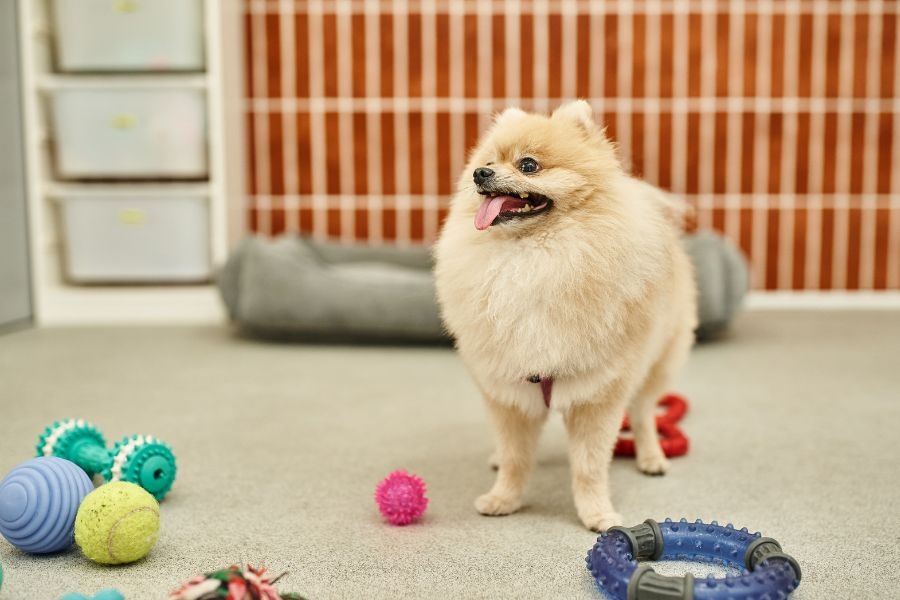
Your dog is barking at the wall. Your cat is knocking glasses off the counter at 2 a.m. Sound familiar? These are not signs of a misbehaving pet. They are signs of a bored one. Pets are intelligent, curious creatures who need more than food and a warm bed to thrive. Interactive toys for pets give dogs and cats a healthy outlet for their mental energy, turning destructive habits into productive ones. Whether your cat loves to stalk and pounce or your dog needs a challenge before settling down for the evening, the right stimulation makes a measurable difference in their mood, behavior, and long-term health. This guide breaks down why interactive play matters, what signs to watch for, and how to build a routine that keeps your pet genuinely engaged every day.
What Are Interactive Toys and Why Do Pets Need Them
Interactive toys are play tools designed to make a pet think, problem-solve, or physically engage in order to receive a reward, complete a challenge, or satisfy a natural instinct. Unlike a simple squeaky toy that offers passive entertainment, interactive options require the animal to participate actively in the experience.
Dogs and cats are not meant to sit still for hours on end. In the wild, both species would spend significant portions of their day hunting, exploring, and problem-solving just to survive. Domesticated life removes those survival pressures, but the instinct to seek, chase, and solve remains completely intact. When that energy has nowhere productive to go, it expresses itself in ways that frustrate pet owners: furniture scratching, excessive barking, chewing, and restlessness.
Research consistently shows that pets who receive regular mental stimulation demonstrate calmer behavior, recover from stress more quickly, and are less prone to anxiety-driven conditions. Mental exercise can tire a dog as effectively as a long walk. For cats, enrichment toys tap into the predator instincts that keep them emotionally satisfied and physically balanced.
Signs Your Pet Needs More Mental Engagement
Recognizing the signs of boredom early helps you intervene before problem behaviors become habits. Pets communicate their unmet needs in predictable ways.
- Destructive chewing or scratching: Dogs who chew furniture and cats who claw walls are often looking for sensory stimulation, not causing trouble on purpose.
- Excessive vocalization: Barking, meowing, or whining without a clear trigger is frequently a signal that a pet wants engagement and interaction.
- Attention-seeking behaviors: Pawing at you repeatedly, jumping, or nudging your hand are ways pets recruit a human to fill the entertainment gap.
- Restlessness at night: If your pet paces, circles, or disrupts your sleep, they may have stored mental energy that was never properly released during the day.
- Hyperactivity that does not resolve with exercise alone: Some dogs and cats remain wound up even after physical activity because their minds were never fully engaged. Boredom in pets shows signs like this, which often go unrecognized by owners who assume exercise alone is sufficient.
If you notice several of these behaviors occurring regularly, it is worth discussing them at your next veterinary visit. Sometimes what looks like boredom overlaps with anxiety or other medical conditions that benefit from professional evaluation.
One pattern we see frequently in practice: a pet owner brings in a dog for excessive barking or a cat for destructive scratching, convinced that something is medically wrong. In many of those cases, the animal is simply understimulated. Adding structured interactive play resolves the behavior within weeks, without any medication needed.
How Interactive Toys Benefit Dogs Specifically
Dogs are social, problem-solving animals. Their intelligence varies by breed, but every dog benefits from mental stimulation for dogs delivered in a consistent, age-appropriate way.
Puzzle feeders slow down fast eaters while making mealtime mentally engaging. Nose work activities channel a dog’s extraordinary sense of smell into a focused, calming game. Tug toys and fetch variations keep the predator-prey sequence alive in a controlled, owner-supervised way. Hide-and-seek games using toys or treats build confidence in timid dogs and strengthen the bond between pet and owner.
Senior dogs benefit especially from gentle mental engagement. As physical mobility decreases with age, interactive play keeps the mind sharp and may slow cognitive decline. Mental stimulation for dogs does not require high energy. A quiet puzzle session can be as satisfying to an older dog as a sprint was in their youth.
A common misconception among dog owners is that a tired dog is a mentally fulfilled dog. Physical fatigue and mental fatigue are not the same thing. A dog that has run for an hour but received no mental challenge can still be restless and anxious at home. Pairing physical exercise with interactive play consistently produces the most settled, content dogs.
In Glen Allen, VA, where warm summers keep pets indoors during the hottest parts of the day, interactive enrichment becomes especially important for dogs who cannot spend long stretches outside.
How Interactive Toys Benefit Cats Specifically
Cats are often misunderstood as independent animals who need minimal stimulation. In reality, indoor cats are among the most enrichment-deprived pets in American households. Without outlets for their hunting instincts, indoor cats can develop anxiety, obesity, and behavioral issues that affect their quality of life significantly.
Enrichment toys for cats work by activating the natural hunt sequence: stalk, chase, pounce, catch. This sequence is hardwired into feline behavior regardless of whether a cat has ever caught actual prey. Wand-style toys, motion-based feeders, and puzzle boxes tap directly into this cycle, allowing a cat to complete the behavioral loop in a safe, satisfying way.
Enrichment toys for cats that encourage foraging, such as treat balls or food mazes, address another feline need: working for food. In nature, cats hunt multiple small meals throughout the day. A single bowl of kibble does not satisfy that drive. Spreading feeding across puzzle feeders throughout the day mimics natural foraging behavior and reduces boredom dramatically.
Short Pump Animal Hospital recommends that cat owners rotate toy selections regularly. Cats habituate quickly to familiar objects, so novelty is a key component of sustained engagement. Swapping toys in and out every few days keeps the experience fresh without requiring constant new purchases.
Building a Daily Enrichment Routine That Sticks
Consistency is what transforms occasional play into lasting behavioral improvement. A structured routine does not have to be complicated to be effective.
Here is a simple framework for building interactive play into your pet’s day:
- Morning engagement: Start the day with a brief puzzle or feeding toy before breakfast. This activates your pet’s mind early and reduces anxious energy that can build overnight.
- Midday variety: If you are home or have a pet sitter available, rotate to a different type of toy in the middle of the day. Cats benefit from wand play at this stage. Dogs do well with nose work or a foraging scatter activity.
- Evening wind-down: End the day with a calmer interactive option that does not overstimulate. For dogs, a stuffed chew toy works well. For cats, a slow-feeder puzzle before their last meal encourages a calm, satisfied sleep.
- Toy rotation: Keep pets mentally active by keeping the toy selection unpredictable. Retire toys for a week and reintroduce them. The novelty restores interest as effectively as a brand-new item.
- Observe and adjust: Watch how your pet interacts with each toy. Some dogs find certain puzzle levels frustrating rather than fun. Some cats prefer ground-level play over vertical challenges. Matching the toy to your individual pet’s preferences makes the routine sustainable.
The goal is not to fill every waking hour with structured activity. It is to give your pet enough mental output each day that they feel genuinely satisfied. Most pets need 15 to 30 minutes of dedicated interactive play daily, in addition to regular physical exercise, to keep boredom in pets signs from reappearing.
Conclusion
Smart pets need more than love. They need challenge, stimulation, and the satisfaction of using their instincts productively. Interactive toys for pets deliver exactly that, improving behavior, reducing anxiety, and strengthening the relationship between you and your animal. Whether you share your home with an energetic dog or a clever indoor cat, building enrichment into your daily routine makes a real difference in how your pet feels. If you are unsure where to start, or if your pet’s behavioral concerns seem deeper than boredom alone, a veterinary consultation can help you identify the right approach. The team at Short Pump Animal Hospital is here to support your pet’s physical and behavioral health at every stage of life. Book an appointment today.
Frequently Asked Questions
Q: How do I know if my cat or dog is bored?
Ans: Common signs include destructive behavior, excessive barking or meowing, restlessness, and attention-seeking that does not stop after brief interaction. If these behaviors are new or increasing in frequency, mental understimulation is often a contributing factor.
Q: How long should I play with my pet each day using interactive toys?
Ans: Most dogs and cats benefit from 15 to 30 minutes of dedicated interactive play daily, split into shorter sessions throughout the day. The right amount varies by age, breed, and individual energy level, so observe your pet’s response and adjust accordingly.
Q: Are interactive toys safe for pets to use unsupervised?
Ans: Some interactive toys are designed for supervised play only, particularly those with small or detachable parts. Always read the toy’s guidelines and assess your pet’s play style before leaving them unsupervised. When in doubt, introduce a new toy with you present first.
Q: Can senior pets benefit from interactive toys?
Ans: Yes, senior dogs and cats can benefit greatly from gentle mental stimulation. Puzzle feeders, slow feeders, and low-intensity nose work activities keep aging minds sharp and provide engagement that is easier on aging joints than high-intensity physical play.
Q: What if my pet is not interested in interactive toys?
Ans: Some pets need time to learn how interactive toys work. Start with the easiest difficulty level and use high-value treats as motivation. If your pet consistently shows no interest or seems anxious around toys, speak with your veterinarian. Lack of engagement can sometimes signal underlying stress, pain, or a medical issue worth evaluating.